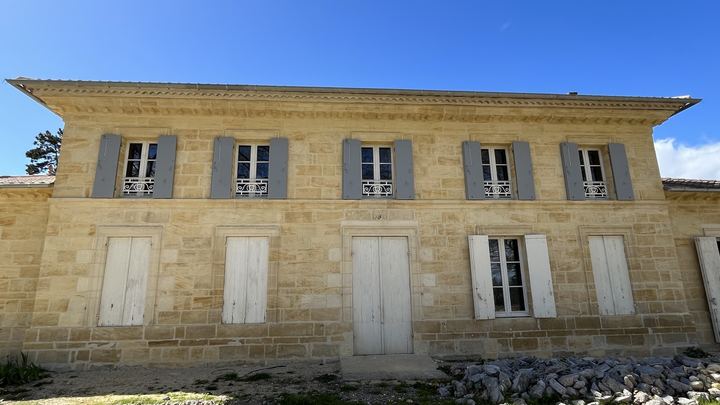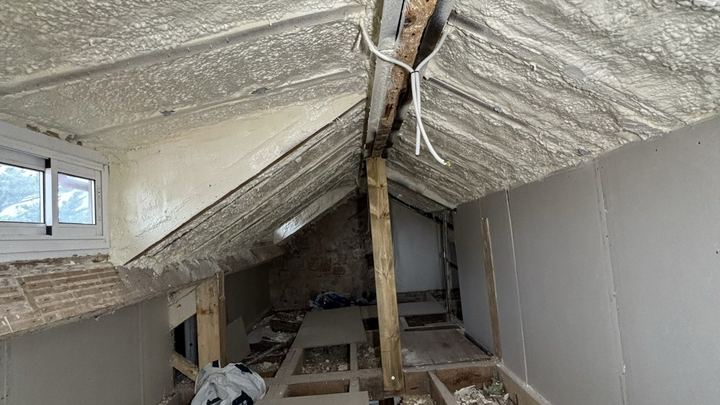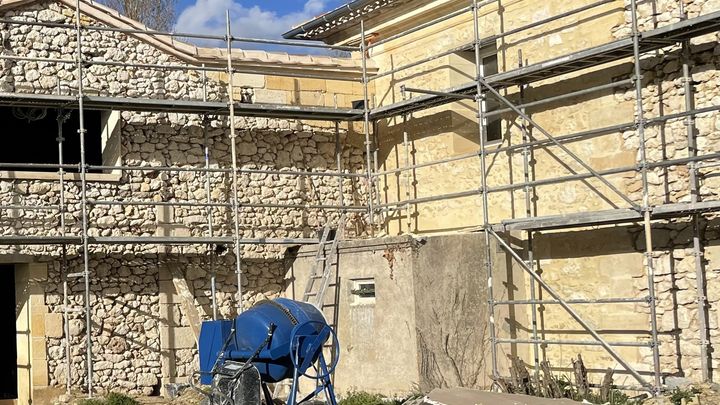
Advice · Renovation
Renovating a house in Libourne: protected area, flood zone and grants in 2026
26 October 2026 · 5 min read · By the Aldeak team
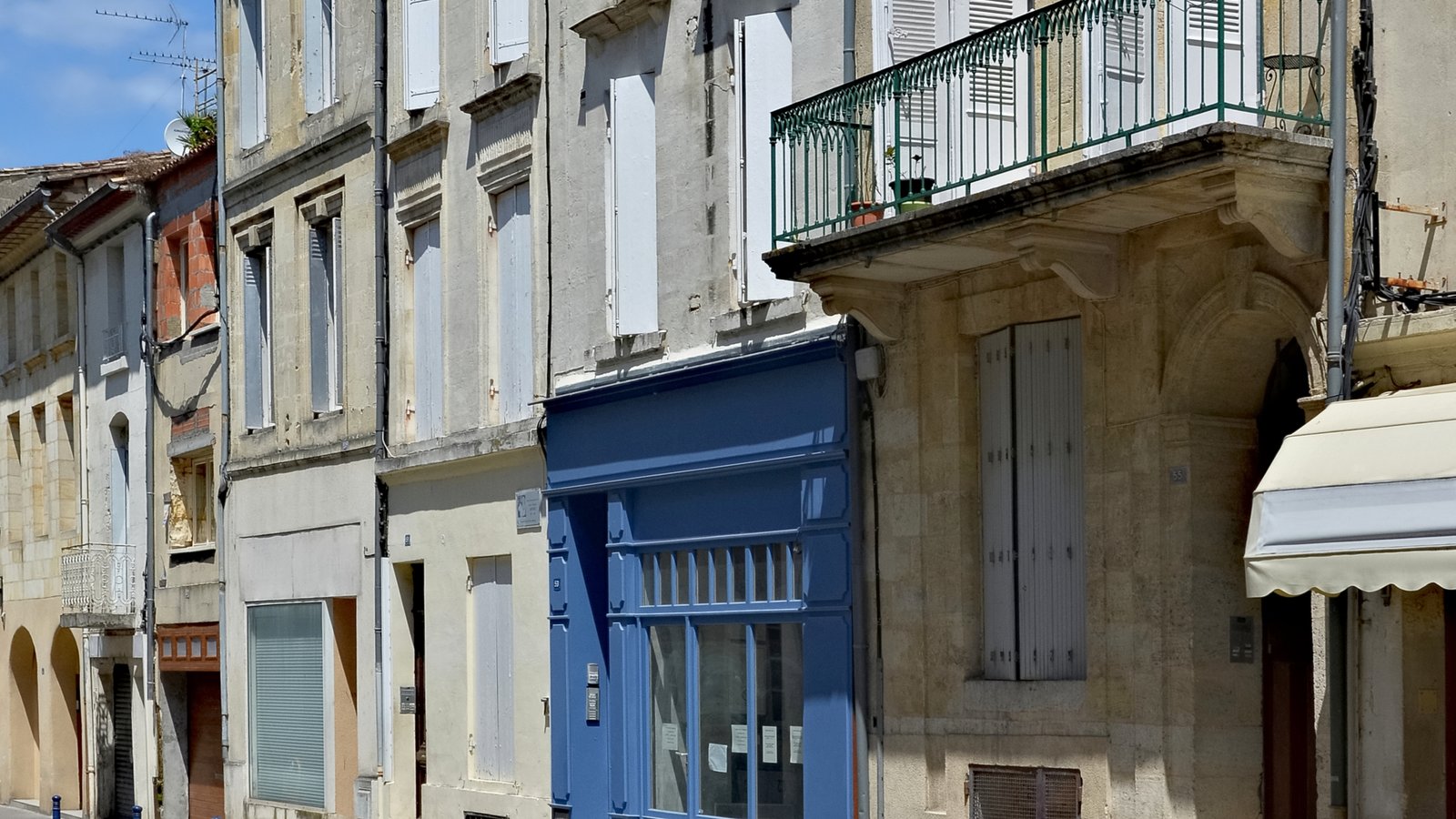
In Libourne, a renovation is prepared with two documents to hand: the regulations of the remarkable heritage site, which govern the appearance of houses in the centre and the old suburbs, and the flood prevention plan for the Dordogne and the Isle. Knowing them before choosing windows, renders or heating avoids refusals and unpleasant surprises.
Two sets of rules on top of the local plan
Libourne grew up at the confluence of the Isle and the Dordogne. Its 13th-century bastide and its suburbs of échoppes (single-storey stone townhouses) are protected, and part of the town is exposed to flooding: two documents therefore add to the local urban development plan (PLU).
The old town and the suburbs: a remarkable heritage site
The architectural and heritage enhancement area, approved on 30 September 2014, now has the status of a remarkable heritage site (site patrimonial remarquable). It divides the town into five sectors: the historic centre, the old suburbs (including L'Épinette and Condat, neighbourhoods of échoppes), the town entrances, the châteaux and hamlets, and the natural areas of the wetland plain. Each sector has its own regulations.
It is a legal easement: even a repair must comply with it. A few examples from the regulations:
- Windows: on échoppes in the centre and the suburbs, they are made of wood with glazing bars; PVC is prohibited, for renovation and replacement alike.
- Roller shutters: prohibited if the box is visible, and never in PVC.
- Walls: in the historic centre, cement-based renders are prohibited, and old ones are removed and redone in lime; external insulation linings are prohibited on street frontages.
- Solar panels: since the amendment of 26 February 2026, they are allowed on échoppes on up to 50% of a roof slope facing the private side, provided they are not visible from the street; they are prohibited on façades and on the most remarkable buildings.
These rules are in line with good practice for renovating a stone house. Works that alter the external appearance require a prior declaration or a planning permit, with the approval of the architecte des Bâtiments de France; the processing time for a prior declaration then rises from one to two months. The application can be submitted online: see our article on planning applications online.
Flood zone: what the prevention plan says
The flood risk prevention plan for the Dordogne and Isle valleys, Libournais sector, was approved by the Gironde prefecture on 16 June 2003. It distinguishes a red zone, where building is prohibited in principle, and a blue zone, in the centre and the built-up neighbourhoods, where the water of the reference flood would rise to less than one metre. The "reference level", shown on the zoning map, corresponds to the maximum estimated level of the hundred-year flood.
In both the red and the blue zones, any refurbishment of a house requires renewed internal services (water, gas, electricity) to be installed above this level, or fitted with an automatic cut-off, and the boiler and tanks to be protected against water. In the blue zone, refurbishment is allowed provided that no additional floor area or dwelling is created below the reference level, and a basement cannot be converted. In the red zone, extending a house is limited, once only, to 10 m², or 20 m² of footprint where the water would rise to one metre at most.
An example to set the heights
Worked example: where should the consumer unit go in the blue zone?
Take, by way of example, a single-storey house in the blue zone, where the zoning map places the reference flood 0.80 metres above the floor. The regulations recommend placing meters and heating 50 centimetres above this level in dwellings.
| Water height of the reference flood (example) | 0.80 m |
| Recommended margin for a dwelling | + 0.50 m |
| Recommended height above the floor | 1.30 m |
Below this height, the regulations recommend materials that withstand water: moisture-resistant insulation, floor and wall coverings that do not deteriorate, water-repellent products. The actual level can be read on the zoning map for your plot.
For a townhouse in the centre, this might give, for example: wooden windows, lime render, consumer unit and boiler upstairs, tiled floor on the ground floor.
Grants in 2026
MaPrimeRénov' for major renovations applies to homes rated E, F or G: 10% to 80% of the cost of the works depending on income, up to a ceiling of €30,000 excluding VAT for a gain of two classes and €40,000 excluding VAT for three classes or more. The single-measure scheme mainly funds heating. Our article on MaPrimeRénov' before getting started sets out the conditions. The town has also supported the restoration of façades and windows in the old town: enquire at the town hall.
As at 26 October 2026, the 2027 budget has not been voted. The government has announced that, from 1 January 2027, a heat pump installed on its own would no longer be funded by MaPrimeRénov', but by the energy bonus alone. This is only a proposal; for a change of heating system, an application submitted before 31 December remains the safest option.
The stages of a renovation in Libourne
The order matters: the grant is applied for before signing the quotes.
- Locate the house: sector of the remarkable heritage site and zone of the flood prevention plan (Géorisques, Géoportail de l'urbanisme or the town hall).
- Carry out the survey: damp, structure, energy performance.
- Meet a France Rénov' adviser, free of charge, before any grant application.
- Submit the planning application and the grant application, then wait for the replies.
- Start the works with RGE-certified firms.
Mistakes to avoid
- Ordering PVC windows for a protected échoppe.
- Fitting out a room below the reference level in a flood zone.
Based in Libourne, we know both sets of regulations and prepare the applications with you. For a complete renovation, discover our full home renovation service.
Sources : Préfecture de la Gironde, plan de prévention du risque inondation « Vallées de la Dordogne et de l’Isle, secteur du Libournais », règlement approuvé par arrêté du 16 juin 2003 · Ville de Libourne, aire de mise en valeur de l’architecture et du patrimoine valant site patrimonial remarquable, approuvée le 30 septembre 2014, règlement modifié le 26 février 2026 · Ministère de la Culture, base Mérimée, « Libourne, site patrimonial remarquable » · Géorisques, document d’information communal sur les risques majeurs de Libourne (crue de référence de 1944) · culture.gouv.fr, « Mes travaux en site protégé » (délai de deux mois en site patrimonial remarquable) · Code du patrimoine, article L. 632-1 (autorisation préalable des travaux en site patrimonial remarquable) ; code de l’urbanisme, article R. 423-24 (délai majoré) · france-renov.gouv.fr · anah.gouv.fr · georisques.gouv.fr
Frequently asked questions
Do I need the approval of the architecte des Bâtiments de France to renovate in Libourne?
Yes, for works that alter the external appearance of a house located in the remarkable heritage site: façade, roof, windows, shutters, fence. The processing time for a prior declaration there is two months.
Is my house in a flood zone, and what difference does it make to the works?
The zoning map of the prevention plan, available on Géorisques or at the town hall, shows it. In the red or blue zone, renewed services are installed above the reference level or fitted with an automatic cut-off, and no dwelling is created below this level.
How much does a complete renovation of a stone house in the Libournais cost?
There is no reliable price per square metre without a visit: the condition of the walls, the roof and the services makes everything vary. The survey and the works programme make it possible to cost the project, then to calculate the grants.
What grants are available in 2026 for an energy renovation in the Gironde?
MaPrimeRénov' (major renovation for homes rated E, F or G, or single measures for heating), energy bonuses, the zero-interest eco-loan and VAT at 5.5%. A France Rénov' adviser will guide you free of charge.
Can solar panels be installed in the centre of Libourne?
Yes on échoppes, since February 2026, on up to 50% of a roof slope on the garden side, provided they are not visible from the street. They remain prohibited on façades and on the most remarkable buildings.