
Advice · Grants and energy
MaPrimeRénov': what you need to know before you start
8 October 2026 · 5 min read · By the Aldeak team
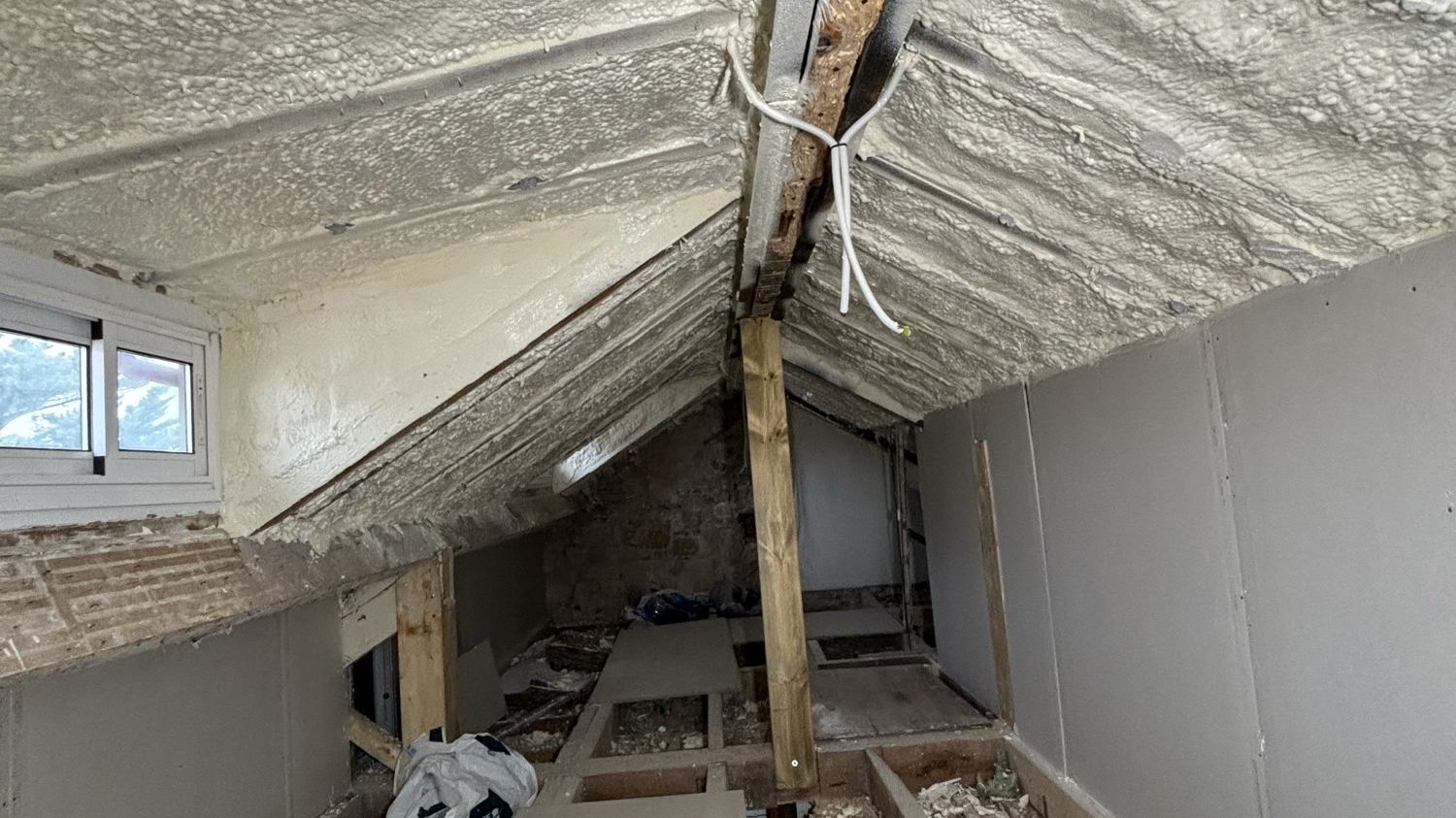
MaPrimeRénov' can fund a significant share of an energy renovation. But its rules change regularly, and a mistake in the timing can cost you the grant. Here are the points to check before signing anything.
Who is eligible?
MaPrimeRénov' is open to owners, whether they live in their home or let it, as well as to usufructuaries. The home must have been built at least 15 years ago and be occupied as a main residence for at least eight months a year. For a whole-house renovation, an owner-occupier undertakes to continue living there for three years after the grant is paid. The amount depends on the household's income, divided into four categories: very low, low, intermediate and higher. In the Gironde, as everywhere outside the Île-de-France region, a couple falls into the "intermediate" category, for example, up to a reference taxable income of €45,842, according to the thresholds in force on 1 January 2026.
Two ways to benefit
MaPrimeRénov' funds either a whole-house renovation or individual measures. In 2026, the individual measures route mainly funds a change of heating system: heat pump, connection to a heating network, removal of an oil tank, through a fixed amount. Households with higher incomes are not eligible and turn to energy saving bonuses instead.
The whole-house renovation route is open to all households, for homes rated E, F or G on the energy performance certificate. The programme must include at least two insulation measures (walls, windows and doors, floors or roof) and improve the rating by at least two classes. In a detached house, it must neither install nor keep oil, gas or coal heating. The conditions, ceilings and rates are set by the State and change regularly: the exact rules should be checked at the time of the project on the official website france-renov.gouv.fr.
How much? The rates for a whole-house renovation
The grant covers a percentage of the cost of the work, up to a ceiling on expenditure:
The percentage depends on the household's income:
- Very low income: 80%;
- Low income: 60%;
- Intermediate income: 45%;
- Higher income: 10%.
Energy saving bonuses are automatically included in the application, and the total of all grants cannot exceed a share of the cost of the work including VAT, from 50% to 100% depending on income.
Worked example: a couple in the Gironde, house rated F
Take, as an example, a couple in the Gironde whose reference taxable income is €40,000: they fall into the "intermediate" category. The proposed programme (insulation of the loft and walls, replacement of the windows, ventilation, a heat pump in place of the oil-fired boiler) aims for an improvement of two classes.
| Cost of the programme | €36,000 excl. VAT |
| Amount taken into account (ceiling for two classes) | €30,000 excl. VAT |
| Rate, intermediate income | 45% |
| MaPrimeRénov' whole-house renovation | €13,500 |
The support service, capped at €2,000 incl. VAT, is covered at 40% for this couple, i.e. €800 at most. That leaves around €22,500 excl. VAT of work to finance, for example with a zero-interest eco-loan and any local grants. These figures illustrate the calculation: only the simulator on france-renov.gouv.fr and your adviser can give the actual amount.
Mon Accompagnateur Rénov'
For a whole-house renovation, support from an approved Accompagnateur Rénov' (renovation adviser) is compulsory. They carry out an audit, help define the programme of work and follow the application. Their service is covered up to €2,000 incl. VAT, from 100% for very low-income households to 20% for higher incomes. Before any application, a first appointment with a France Rénov' adviser, free of charge, is compulsory: the certificate of this appointment must be attached to the application.
The steps, in order
- Appointment with a France Rénov' adviser, who checks your eligibility.
- Audit and programme of work with your Accompagnateur Rénov'.
- Quotes from RGE-certified firms, then submission of the application online.
- Work, only once the application has been accepted.
- Submission of the invoices and payment of the grant; an advance is possible, subject to conditions, for very low and low-income households.
The rules never to forget
- Use RGE-certified professionals (recognised as environmental guarantors) for the subsidised work.
- Keep detailed quotes and invoices, which are used for the payment of the grant.
- Beware of cold calling: telephone canvassing for energy renovation is prohibited, and no official body will call you to sell you work.
- Allow for delays: in 2026, applications only reopened on 23 February, after the budget was passed. The processing time must be built into the project schedule.
Submit the application before the work begins. Work started before approval may not be funded.
Other grants to combine
MaPrimeRénov' can be combined with local grants, the zero-interest eco-loan and, depending on the route, energy saving certificates (energy saving bonuses). The rules for combining them depend on the route chosen: a France Rénov' adviser will help you build the financing plan.
How we support you
We work with you to build a coherent programme of work (insulation, windows and doors, heating, ventilation), coordinated with the energy audit and the grant timetable. On a project such as the loft insulation in Bidart, the order of the work matters as much as the quality of each element.
Sources : Décret n° 2020-26 du 14 janvier 2020 relatif à la prime de transition énergétique (MaPrimeRénov’) · Anah et France Rénov’, « MaPrimeRénov’, le mode d’emploi », septembre 2026 (taux, plafonds de travaux et plafonds de ressources au 1er janvier 2026) · Loi n° 2020-901 du 24 juillet 2020 (interdiction du démarchage téléphonique pour la rénovation énergétique) · ecologie.gouv.fr, réouverture du guichet MaPrimeRénov’ · france-renov.gouv.fr · anah.gouv.fr
Frequently asked questions
Can you apply for MaPrimeRénov' after starting the work?
No: the application must be submitted before the work begins, unless a rule explicitly provides otherwise. Check on france-renov.gouv.fr.
Who is eligible for MaPrimeRénov'?
Owner-occupiers, landlords and usufructuaries, for a home built at least 15 years ago and occupied as a main residence. The amount depends on the household's income and on the project; the income thresholds are published each year by the Anah (the national housing agency).
Where can you find a free adviser?
Through the France Rénov' network (france-renov.gouv.fr), which will direct you to the advice centre in your département.
What is the maximum amount for a whole-house renovation?
In 2026, from 10% to 80% of the cost of the work depending on income, up to €30,000 excl. VAT of work for an improvement of two classes and €40,000 excl. VAT for three classes or more. That is at most €24,000 or €32,000 for a very low-income household.
Can you keep a gas boiler?
Not in a whole-house renovation of a detached house: the programme must neither install nor keep oil, gas or coal heating. It is, however, possible in a flat.