
Advice · Renovation
Renovating a stone house without damaging it
8 October 2026 · 5 min read · By the Aldeak team
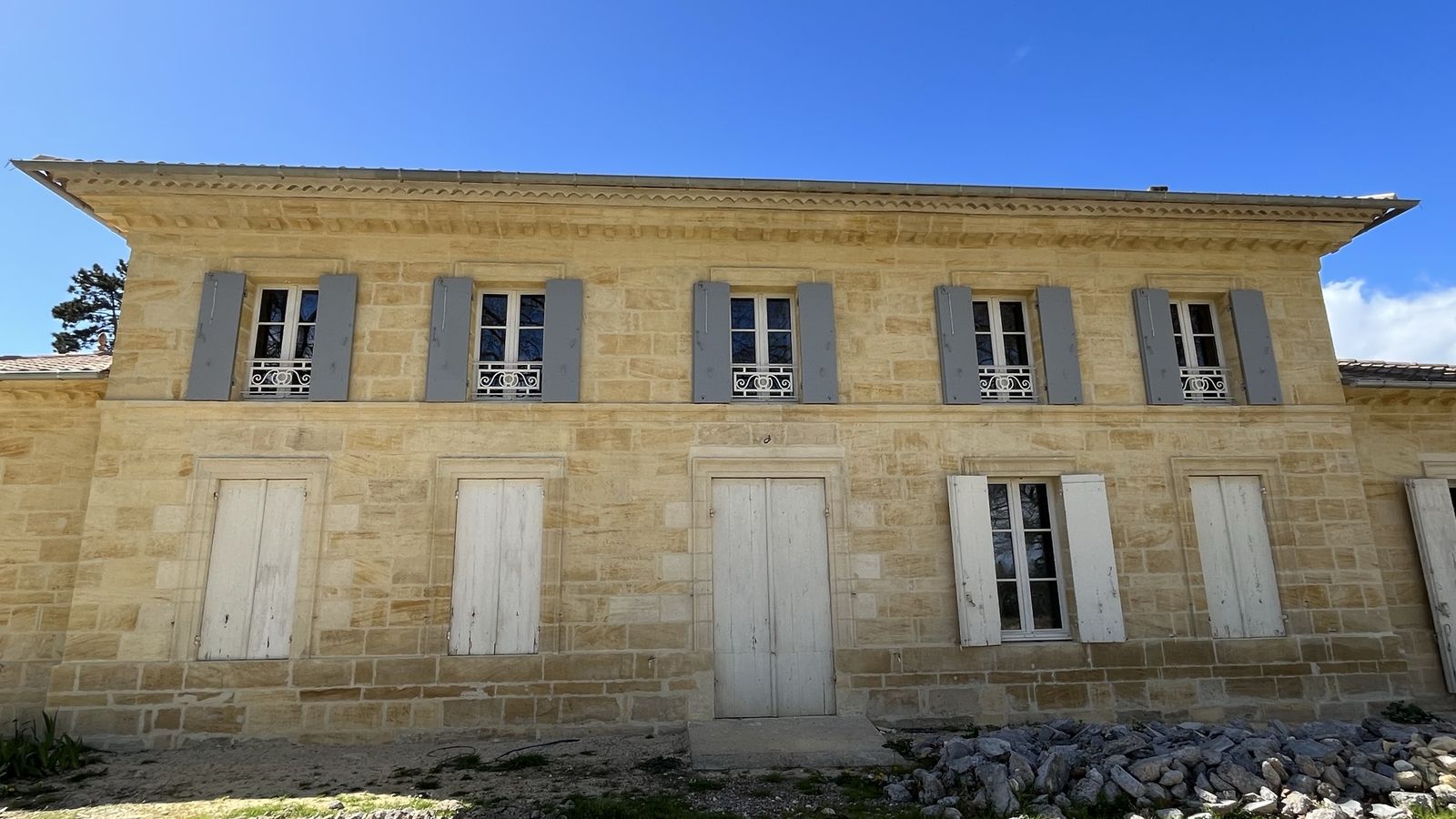
A stone house has lasted more than a century thanks to materials that breathe. Renovating it with unsuitable modern materials can damage it within a few years. Here are the principles we follow.
An old wall is a wall that breathes
Walls made of stone and lime mortar let moisture from the ground and the air in and then out again. As long as this balance is respected, the wall stays healthy. A cement render, an impermeable paint or a closed insulation material blocks this release: water builds up, the stone deteriorates, renders blister and mould appears.
Lime, the ally of stone
Renders and joints are redone in natural lime, which is more flexible and permeable than cement. On a façade, a lime render protects the wall while letting it breathe; on dressed stone, gentle cleaning and repointing are often enough to restore its lustre.
There are two main families of lime, defined by the NF EN 459-1 standard: air lime, which hardens slowly in contact with the air and is suited to finishing renders and limewashes, and natural hydraulic lime, labelled NHL, which also sets in the presence of water and is better suited to exposed joints and plinths. The choice depends on the hardness of the stone.
"A mortar must always remain softer than the stone around it."
That way, it is the joint that wears, not the stone.
Dealing with damp first
Before insulating or decorating, we look for the causes: faulty gutters, outside ground level too high against the wall, rising damp, an impermeable render to be removed. Drainage, reworking the surroundings of the house or removing a cement render often solves the problem better than a chemical treatment.
The diagnosis is made by eye and by hand: traces of saltpetre at the foot of the wall, render that sounds hollow, blistering paint, a cellar smell. We also observe the house after heavy rain, and look at what happens outside, where the water arrives. A concrete terrace poured against the façade, for example, sends water back into the wall instead of letting it evaporate.
Insulating without trapping moisture
Old walls are insulated with materials that are permeable to water vapour: wood fibre, hemp, lime-based insulating renders, cork. Lofts and floors, for their part, can be insulated without any particular difficulty and often bring the greatest gain in comfort.
Good to know: the rule requiring a wall to be insulated during major façade refurbishment (more than half of the façade, excluding openings) only applies to walls made mainly of fired clay, concrete, cement or metal. A stone wall is not subject to it. You can therefore redo a stone façade in lime without being forced to wrap it in insulation that would not suit it.
An example to give an idea of the figures
Worked example: insulating the loft of a stone house
Take, by way of example, a single-storey stone house with an uninsulated, unconverted loft and walls 50 centimetres thick. To qualify for energy grants, insulation of an unconverted loft must reach a thermal resistance of at least 7 m².K/W (6 under sloping roofs). The thickness required is easy to calculate: the resistance multiplied by the conductivity of the insulation.
| Target thermal resistance | 7 m².K/W |
| Conductivity of blown wood fibre | around 0.04 W/m.K |
| Thickness required | about 28 cm |
The exact value is given on the product's technical data sheet. This is often the first step, as it is simple to carry out and does not touch the walls.
For the walls, the aim is rather a thermal corrector: a lime-hemp render or a wood-fibre lining a few centimetres thick, applied to a sound wall, removes the cold-wall feeling without blocking water vapour.
The stages of a successful renovation
- Observe and diagnose: condition of the stones, the joints and the roof, origin of the damp.
- Make the house watertight: roof, gutters, downpipes, surroundings of the house.
- Remove whatever blocks moisture: cement renders, impermeable paints, linings bonded to the wall.
- Let it dry, sometimes for several months, before closing the walls again.
- Insulate and finish with compatible materials: lime, wood fibre, hemp, mineral paints.
Mistakes to avoid
- Injecting a product against rising damp without having removed the cement render or lowered the ground level: the cause remains.
- Bonding a plasterboard and polystyrene lining to a damp wall: the water is trapped behind it, out of sight.
- Painting the façade with acrylic paint: it forms an impermeable film, instead of a limewash or a mineral paint.
- Sandblasting the stone: the stone's protective surface goes with the dirt.
Respecting the appearance and the rules
In a protected area or near a historic monument, façade works are subject to the opinion of the Architecte des Bâtiments de France (the state heritage architect). Even elsewhere, the local urban plan often regulates renders, joinery and colours.
Keeping the character of an old house while modernising the interior is also the spirit of the Basque house revisited. On our house renovation projects on stone houses in the Gironde, from the scaffolding to the restored façade, we follow these principles so that the house lasts a long time yet.
Sources : Code du patrimoine, article L. 632-2 (avis de l’architecte des Bâtiments de France en secteur protégé) · Code de l’urbanisme, article R. 421-17 (déclaration préalable pour la modification de l’aspect extérieur) · Norme NF EN 459-1 (chaux de construction : chaux aériennes et chaux hydrauliques naturelles NHL) · Code de la construction et de l’habitation, articles R. 173-4 et suivants (isolation lors d’un ravalement important, limitée aux murs en terre cuite, béton, ciment ou métal) · Fiche d’opération standardisée des certificats d’économies d’énergie BAR-EN-101 (isolation des combles : R ≥ 7 m².K/W en combles perdus, 6 en rampants) · geoportail-urbanisme.gouv.fr
Frequently asked questions
Can a stone wall be insulated from the inside?
Yes, with insulation that is permeable to water vapour (wood fibre, hemp, lime-hemp render) and after the damp problems have been dealt with.
Why do cement renders damage old walls?
They are impermeable and rigid: moisture can no longer escape and damages the stone and the joints behind the render.
Do you need permission to redo a stone façade?
Generally a prior declaration (déclaration préalable), and the opinion of the Architecte des Bâtiments de France in a protected area.
Do you have to insulate the walls when you redo the façade?
Not for a stone wall: the obligation to insulate during major façade refurbishment only concerns walls made of fired clay, concrete, cement or metal.
Which lime should be used for repointing?
A natural hydraulic lime (NHL) for exposed joints, an air lime for finishing renders, always keeping a mortar softer than the stone.
How long should a wall be left to dry?
It depends on its thickness and condition: the wall is closed again once it has dried, which can take several months after an impermeable render has been removed.