Advice · Grants and energy
New energy performance certificate on 1 January 2027: should you submit your whole-house renovation application before then, so as not to lose any grant?
16 November 2026 · 5 min read · By the Aldeak team
Not necessarily, but submitting before 31 December 2026 removes a real uncertainty for houses heated by electricity. On 1 January 2027, the DPE (energy performance certificate) will count electricity with a factor of 1.7 instead of 1.9: a house rated F may move to E without any work, gain one class fewer on paper and see the ceiling of its grant fall. No official text yet says which rating the Anah will use for an audit carried out in 2026 and an application submitted in 2027.
What changes on 1 January 2027
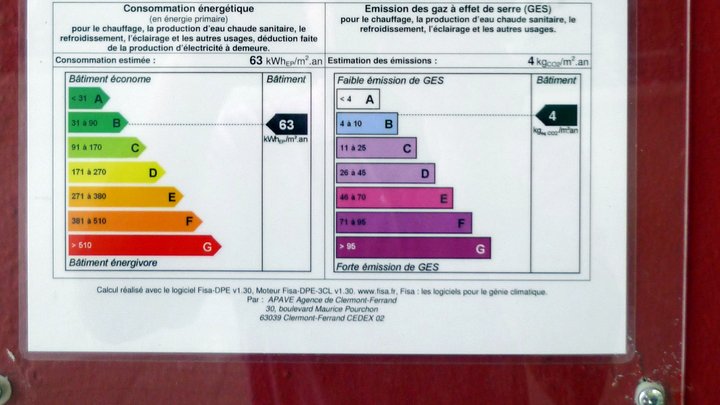
An order dated 19 August 2026, published in the Journal officiel (the French official gazette) on 26 August, lowers the electricity factor from 1.9 to 1.7 in the DPE and in the energy audit, from 1st January 2027. This factor converts the kilowatt-hours read on the meter into primary energy, which determines the rating. It is the second reduction in a year: it was still 2.3 at the end of 2025.
On the electrical share, displayed consumption therefore falls by 10.5% (1.7 divided by 1.9). The effect is full in an all-electric house, smaller if the hot water or a stove uses another energy. CO2 emissions do not change, and the rating still takes the worse of the two scores. According to the impact study reported by the press, around 300,000 homes would thus leave classes F and G.
DPEs and audits already carried out remain valid until their expiry date. The Ademe (the French environment and energy agency) will publish on its observatory a certificate of the new rating. It will be free, with no new visit. For an audit, it recalculates the classes before and after works without changing the programme. The same system was used on 1st January 2026.
Why the grant may fall
The whole-house renovation strand of MaPrimeRénov' targets houses rated E, F or G, provided they gain at least two classes. Works are eligible up to €30,000 excluding VAT for two classes and €40,000 excluding VAT for three or more, at a rate of 80, 60, 45 or 10% depending on income (service-public.fr, page checked on 1st September 2026). Our article on the works needed to gain two DPE classes details the combinations that work.
The new calculation has two effects. An electrically heated house rated E that moves to D drops out of whole-house renovation funding. A house rated F that moves to E keeps its entitlement, but the same renovation gains it one class fewer, and the ceiling falls from €40,000 to €30,000 excluding VAT.
Worked example: all-electric house rated F, near Royan
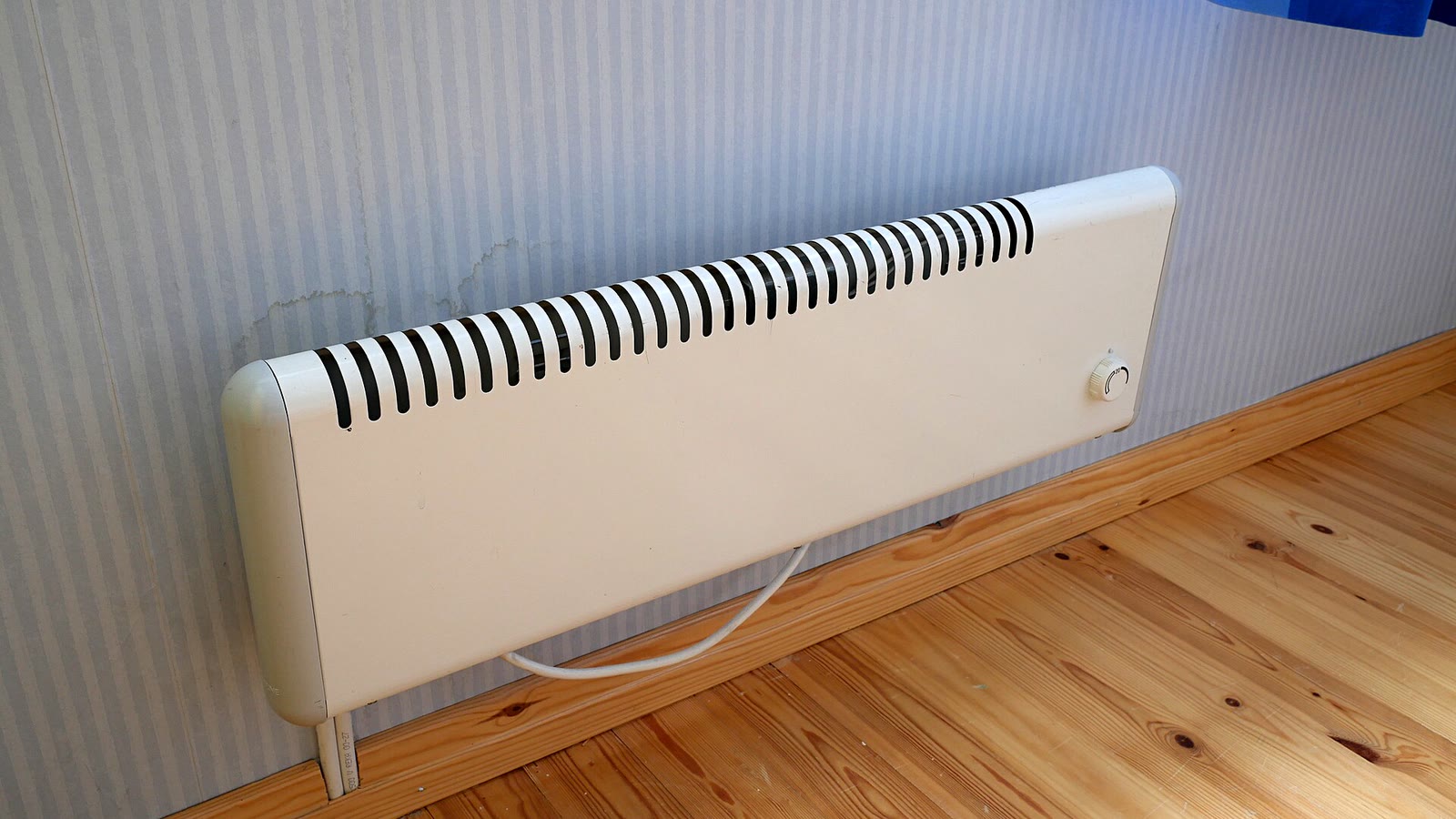
Take, as an example, a 1970s house heated by convector heaters, with an electric water heater, and a household on modest income (60% rate). The 2026 audit shows 340 kWh/m²/year; the works programme aims for 170 kWh/m²/year. We count on the energy criterion alone: in an all-electric house, CO2 gives a better score.
| Before works, 2026 calculation | 340 kWh → class F |
| Same house, 2027 calculation: 340 × 1.7 / 1.9 | 304 kWh → class E |
| After works | 170 kWh (2026) or 152 kWh (2027) → class C |
| Classes gained | 3 in 2026, 2 in 2027 |
| Eligible works on a quote of €45,000 excl. VAT | €40,000 or €30,000 excl. VAT |
| Grant at 60% | €24,000 or €18,000 |
| Difference if the 2027 rating is used | €6,000 less in grant |
Heated by gas, the same house would stay in F: the gas factor does not change.
Who is really affected
Only houses heated by electricity, or producing their hot water with it, change rating. For an all-electric house, the letter changes if consumption is no more than about 11% above the bottom of its class: below 369 kWh/m²/year for a house in F, below 280 for a house in E, below 469 for a house in G. Above that, the letter stays the same, and so does the grant.
These calculations are made on the audit, line by line. Our article on the energy audit and who can carry it out explains how to read it.
Submitting before 31 December: what we know
As of 16 November 2026, no text from the Anah or the ministry says which rating will be used for an audit carried out in 2026 and an application submitted in 2027. An energy comparison website (26 August 2026) considers it "fragile" to rely on the old rating, since the certificate at 1.7 will be available to everyone, and advises submitting before 1st January. That is an opinion, not a rule. For the reform of 1st September 2026, it was the date the application was submitted that counted (decree no. 2026-822), but nothing says the Anah will reason in the same way for the DPE.
As of 16 November 2026, nothing has been voted for 2027. The draft budget provides €1,233 million for the Anah, compared with €1,450 million in 2026. The National Assembly rejected the bill on 4 November; the Senate is due to examine these funds from 1st December, if the timetable holds. The MaPrimeRénov' rules for 2027 have not been published.
Rushing also has a cost. The application requires an appointment with a France Rénov' adviser, an Accompagnateur Rénov' (approved renovation adviser), an audit, quotes from RGE-certified contractors and the tax assessment notice. The work cannot start before the Anah's acknowledgement of receipt.
The steps before the end of the year
- Reread the audit: energy used for heating and hot water, consumption in kWh/m²/year, gap with the bottom of the class.
- Ask for a recalculation at 1.7 from the auditor or the Accompagnateur Rénov', before and after works.
- Book an appointment with France Rénov', a compulsory step before submitting.
- Have the works priced by RGE-certified contractors, without signing anything under the pressure of a deadline.
- Submit the complete application on france-renov.gouv.fr, then wait for the acknowledgement of receipt before starting any work.
To gauge your budget, see what a whole-house renovation costs.
How we support you
In Gironde, the Landes, the Basque Country and Charente-Maritime, we price the works set out in the audit and work with your Accompagnateur Rénov' so that the scenario holds up under the new calculation. To find out more, see our full home renovation page.
Sources : Légifrance, arrêté du 19 août 2026 modifiant le facteur de conversion de l’électricité pour le DPE (NOR VLOL2617030A, JO du 26 août 2026) : 1,9 remplacé par 1,7 pour le DPE et l’audit au 1er janvier 2027, attestation de nouvelle étiquette de l’Ademe pour les DPE et audits existants · Ministère de la Transition écologique, communiqué sur l’arrêté abaissant le facteur de l’électricité à 1,7 au 1er janvier 2027 (31 août 2026) : mise à jour gratuite, sans nouvelle visite · Service-public.fr, MaPrimeRénov’ rénovation d’ampleur (vérifié le 1er septembre 2026) : classes E, F, G, deux classes gagnées au moins, plafonds de 30 000 et 40 000 € HT, taux de 80, 60, 45 et 10 %, audit et Accompagnateur Rénov’ obligatoires · Service-public.fr, diagnostic de performance énergétique : seuils des classes (arrêté du 31 mars 2021), étiquette retenue sur la plus mauvaise note entre énergie et CO2 · Légifrance, décret n° 2026-822 du 25 août 2026 sur MaPrimeRénov’ : règles appliquées selon la date de dépôt de la demande · AFP via Connaissance des énergies (26 août 2026) : environ 300 000 logements sortiraient des classes F et G selon l’étude d’impact · Selectra, « DPE à 1,7 en 2027 : MaPrimeRénov’ rénovation d’ampleur, saut de classes et aide perdue » (26 août 2026) : avis de déposer avant le 1er janvier 2027 · Selectra, « Pompe à chaleur : l’aide 2027 se joue au Sénat le 1er décembre » (10 novembre 2026) : 1 233 M€ prévus pour l’Anah en 2027 contre 1 450 M€ en 2026, projet rejeté par l’Assemblée le 4 novembre
Frequently asked questions
Will my DPE change on 1 January 2027 without any work?
Only if the house uses electricity for heating or hot water. Displayed consumption then falls by up to 10.5%, and a certificate of the new rating can be downloaded free of charge from the Ademe's observatory, with no new visit.
If my house moves from E to D, am I still entitled to whole-house renovation funding?
No, if class D is the one used: this grant is reserved for classes E, F and G. Energy saving bonuses (CEE) and the zero-interest eco-loan remain available, depending on the works.
Should I submit my MaPrimeRénov' application before 31 December?
For an electrically heated house close to a class threshold, it is the safest option if the application is ready, as no text yet says which rating will be used in 2027. For a house heated by gas or oil, the DPE gives no reason to rush.
How much work does it take to go from G to E, or from F to C?
Gaining two or three classes almost always means insulating the roof and walls, changing the heating system and dealing with ventilation. Works are funded up to €30,000 excluding VAT for two classes and €40,000 excluding VAT for three; only the audit prices the scenario for your house.