Advice · Grants and energy
Aiming for class A on the energy performance certificate: is it realistic for a renovated house?
8 October 2026 · 5 min read · By the Aldeak team
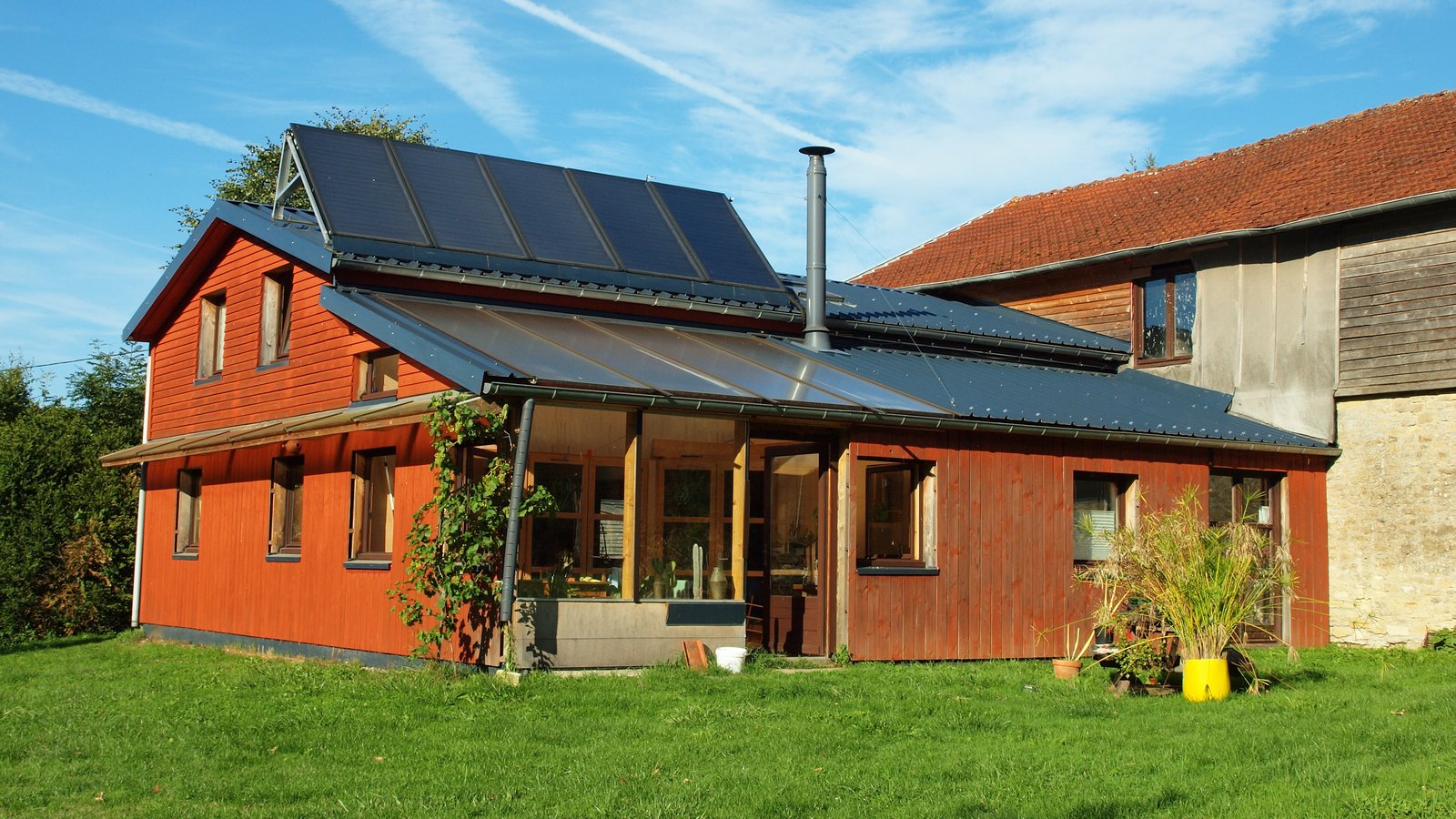
Class A is the house that consumes very little and emits very little. In new builds, it is becoming common. In existing homes, it requires an ambitious programme, but class B or C is often within reach of a well-managed renovation.
The energy performance certificate thresholds
The energy performance certificate uses the weaker of two ratings: primary energy consumption and greenhouse gas emissions. For class A, a home must stay below 70 kWh per square metre per year and below 6 kg of CO2 per square metre per year. Class B stops at 110 kWh and 11 kg, class C at 180 kWh and 30 kg.
Since 1 January 2026, each kilowatt-hour of electricity has counted as 1.9 kWh of primary energy in the calculation, compared with 2.3 previously; wood, gas and heating oil count as 1. The calculation takes into account heating, hot water, any cooling, lighting and auxiliary equipment (fans, pumps). It is a standardised consumption figure, not a household's actual bill.
Worked example: a 120 m² house heated by a heat pump
Take, as an example, a 120 m² house heated by a heat pump. Its standardised consumption, for all the uses counted, must stay below these ceilings:
| Class A: 70 × 120 | 8,400 kWh of primary energy per year |
| Class B: 110 × 120 | 13,200 kWh of primary energy per year |
| Electricity coefficient in 2026 | 1.9 |
| Maximum electricity consumed | around 4,400 kWh per year for A, 6,950 kWh for B |
A heat pump produces several times more heat than the electricity it consumes, but it will not keep a poorly insulated house within these limits: everything depends first on the building envelope.
What makes the difference in an existing house
- An envelope insulated throughout: roof, walls, ground floor, without forgetting the junctions where thermal bridges form.
- Airtightness: leaks around windows and doors, hatches and service penetrations count for a great deal.
- High-performance ventilation, often a heat recovery ventilation system that recovers heat from the outgoing air.
- Low-emission heating: a heat pump or efficient wood heating, rather than oil or gas.
- Hot water, often overlooked, which carries weight in the calculation.
Between B and A, the difference often lies less in the thickness of insulation than in attention to detail. An air permeability test, carried out with a blower door before the finishes, makes it possible to find leaks while they are still easy to fix. A test report less than two years old can also be given to the assessor to make the calculation more reliable.
The stages of an ambitious project
- An up-to-date energy performance certificate, to be redone if yours dates from before 2026 and the house is heated by electricity.
- An energy audit, which proposes at least one scenario reaching class B, unless this is technically impossible.
- Choosing the target level: A, B or C, depending on the house, the budget and the grants.
- Work carried out in the right order: envelope and airtightness first, then ventilation, and heating and hot water last, sized for the renovated house.
- A new energy performance certificate after the work, which records the class achieved.
The limits of an older house
Some houses do not lend themselves to everything: a dressed-stone façade that you do not want to cover, thick walls that require breathable insulation materials, an unfavourable orientation. In these cases, aiming for class A can cost a great deal for a limited gain in comfort. Class B or C, achieved with choices that respect the building, is often more reasonable.
Grants for a high-performance renovation
If the house is rated E, F or G to begin with, MaPrimeRénov' for a whole-house renovation can fund the programme, with a compulsory Accompagnateur Rénov' (renovation adviser), at least two insulation measures and a gain of at least two classes. The ceiling for eligible work rises from €30,000 excl. VAT for two classes gained to €40,000 excl. VAT for three classes or more, and the rate ranges from 10% to 80% depending on income.
For a detached house, a project that keeps or replaces a gas or oil boiler is not eligible for the grant.
A house already rated D does not fall within this scheme: the zero-interest eco-loan, up to €50,000 for a whole-house renovation, can then take over.
Mistakes to avoid
- Starting with the heating: an appliance sized for the house as it was will be too powerful after insulation.
- Insulating without ventilating: a house that has become airtight, with no air renewal, builds up damp.
- Forgetting hot water, which weighs all the more in the calculation as heating needs fall.
- Covering a stone façade with insulation that spoils its character or prevents it from drying out, to gain a class on paper.
- Aiming for class A at any cost, when the last step costs more than everything else.
The right approach
Start from the energy audit, which costs several scenarios and the number of classes each one gains. Then compare the cost, the possible grants, the comfort achieved and the value added to the house.
“The best scenario is not always the most ambitious one on paper.”
Our approach
We help you choose the target level according to your house and your budget, then we carry out all the whole-house renovation work in the right order, with a single point of contact.
Sources : Arrêté du 31 mars 2021 relatif au diagnostic de performance énergétique (seuils des classes A à G) · Code de la construction et de l’habitation, article L. 173-1-1 (classes de performance énergétique) · Arrêté publié au Journal officiel du 26 août 2025 (coefficient de conversion de l’électricité du DPE, applicable au 1er janvier 2026) · Anah et France Rénov’, « MaPrimeRénov’, le mode d’emploi », septembre 2026 (taux et plafonds de la rénovation d’ampleur) · Arrêté du 4 mai 2022 définissant le contenu de l’audit énergétique réglementaire (scénario atteignant au moins la classe B) · Code général des impôts, article 244 quater U (éco-prêt à taux zéro) · france-renov.gouv.fr, MaPrimeRénov’ rénovation d’ampleur · service-public.fr
Frequently asked questions
Can an older house reach class A?
It is possible but demanding: full insulation, airtightness, heat recovery ventilation and low-emission heating. Class B or C is often more realistic.
What is the difference between class A and class B?
Class A requires less than 70 kWh/m²/year and less than 6 kg CO2/m²/year; class B goes up to 110 kWh and 11 kg.
Can the heating alone gain a house several classes?
It can improve the emissions rating, but without insulation consumption remains high. The two go together.
Does the 2026 energy performance certificate calculation change things?
For electrically heated houses, yes: the electricity coefficient fell from 2.3 to 1.9 on 1 January 2026. A heat pump does more to help reach A or B, but insulation remains essential.
Is an airtightness test compulsory?
Not in renovation. It is still very useful when aiming for A or B: carried out before the finishes, it makes it possible to fix leaks while this is still simple.
Can a renovation to class A receive a grant?
Yes, if the house starts from class E, F or G: MaPrimeRénov' for a whole-house renovation funds a gain of at least two classes, with a ceiling of €40,000 excl. VAT from three classes gained.