Advice · Grants and energy
House rated F or G: what work is needed to stop it being an energy sieve
8 October 2026 · 5 min read · By the Aldeak team
A house rated F or G consumes a lot of energy, is harder to sell and will soon no longer be lettable. The good news: with a well-planned programme of work, it can gain several classes at once.
What “energy sieve” means
The energy performance certificate rates homes from A to G according to their energy consumption and their greenhouse gas emissions. Classes F and G designate energy sieves (passoires thermiques): heat escapes through the roof, the walls, the windows and the floors, and the bills follow.
For owners who let their property, the Climate and Resilience Act sets a timetable: homes rated G can no longer be offered for let since 1 January 2025, those rated F will be affected in 2028 and those rated E in 2034. For owners selling a house rated E, F or G, an energy audit must be given to the buyer.
Since 1 January 2026, the energy performance certificate calculation has been more favourable to electrically heated homes: many gain a class without any work. A recent certificate is therefore the first thing to check.
The thresholds to know
The class used is the weaker of the two ratings: primary energy consumption and greenhouse gas emissions. A home is rated G above 420 kWh per square metre per year, or 100 kg of CO2 per square metre per year. It is rated F between 331 and 420 kWh (or between 71 and 100 kg of CO2), E between 251 and 330 kWh (or between 51 and 70 kg), and D up to 250 kWh and 50 kg. A well-insulated house heated with oil can therefore remain rated F because of its emissions.
For owners who let their property, the rent of a home rated F or G can no longer be increased since 24 August 2022, whether during the tenancy, on renewal or for a new letting.
1. Start with an energy audit
The audit identifies the weak points of the house and proposes costed work scenarios, with the expected number of classes gained. It is the basis of a coherent programme, and it is required for a whole-house renovation funded by MaPrimeRénov'.
2. Insulate where the most heat is lost
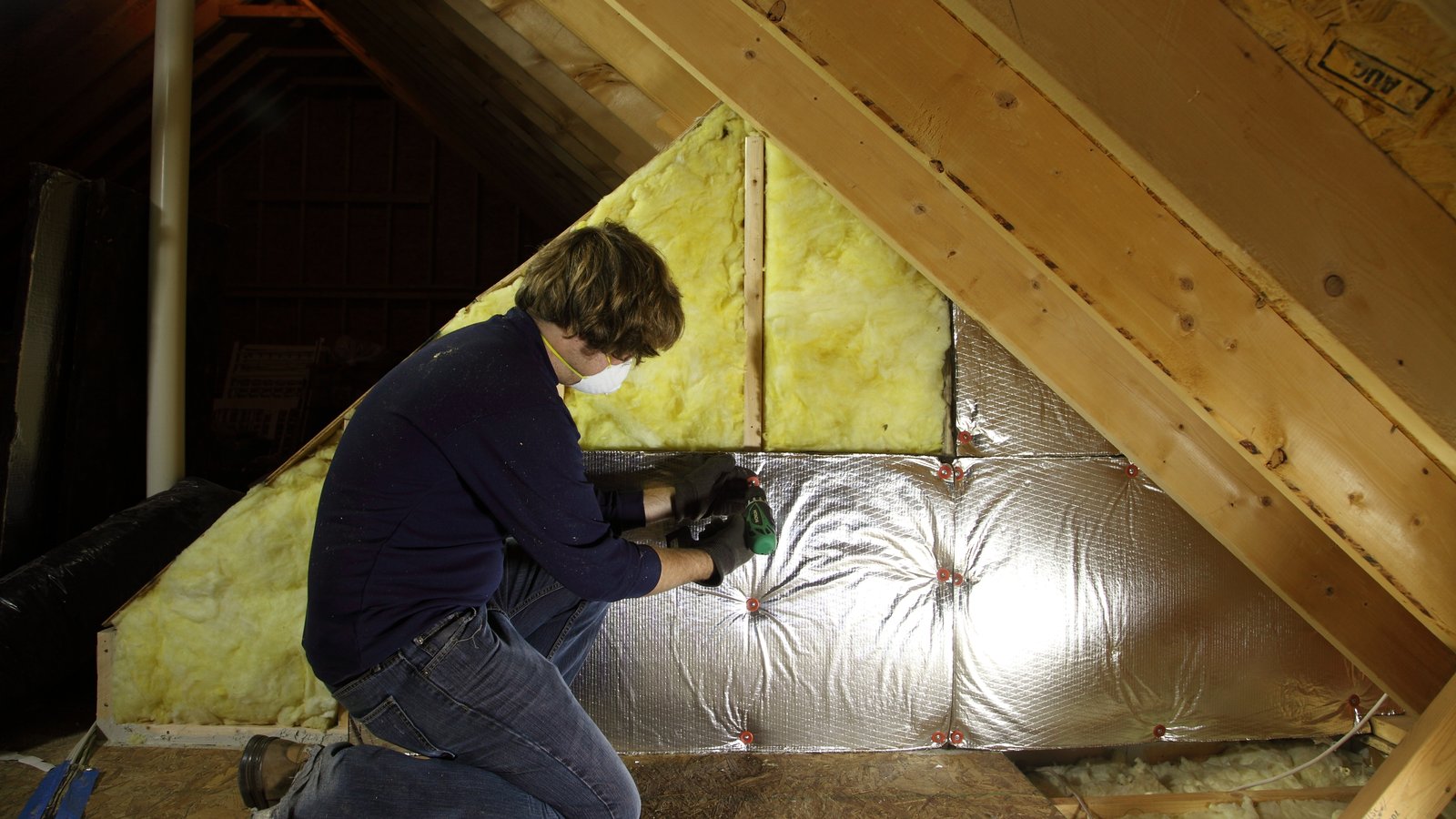
- The roof and the loft: often the most cost-effective measure, because heat rises.
- The walls: from the inside or the outside. On a stone house, insulation materials that allow the wall to breathe are chosen.
- The ground floor, above a cellar or a crawl space.
- Windows and doors: high-performance, properly fitted windows eliminate draughts.
3. Ventilate, then heat correctly
A better-insulated house becomes more airtight: suitable ventilation prevents damp and mould.
“The heating comes next, sized for the renovated house and not for the energy sieve it used to be.”
Doing the opposite almost always leads to an appliance that is too powerful and more expensive.
4. Treat the whole house rather than one measure at a time
Replacing only the windows or only the boiler rarely takes a house out of the energy sieve category. A whole-house programme, carried out in the right order, makes it possible to gain several classes and to access the largest grants. It also avoids opening up the walls twice.
Worked example: a let house rated G
Take, as an example, a let house whose energy performance certificate shows 450 kWh per square metre per year: it is rated G and can no longer be the subject of a new tenancy.
| Bringing it down to 400 kWh | class F, but only until 1 January 2028 |
| Bringing it below 330 kWh (around a quarter less) | class E: no concerns until 2034 |
| Bringing it below 250 kWh (almost half as much) | class D: no need to come back to it |
It is the audit that shows which work will reach one target or the other, and what it will cost.
Grants for an energy sieve
In 2026, MaPrimeRénov' for a whole-house renovation is available for homes rated E, F or G, for work that gains them at least two classes, with a compulsory Accompagnateur Rénov' (renovation adviser). The grant ranges from 10% to 80% of the cost of the work depending on income, up to €30,000 excl. VAT of work for a two-class gain and €40,000 excl. VAT for three classes or more. Landlords are eligible, subject to conditions. The zero-interest eco-loan, up to €50,000, can finance the remaining cost.
Mistakes to avoid
- Relying on an old energy performance certificate: a certificate issued before 2026 may no longer reflect the current class, especially for an electrically heated house.
- Aiming only just for class F when the house is let: the work will have to be done again before 2028.
- Changing the heating alone, without insulating: consumption falls only slightly and the appliance is oversized.
- Signing quotes before submitting the grant application: the grant may be lost.
- Responding to cold calls about energy renovation work: they are prohibited, and are often the sign of a scam.
How we support you
We start from the audit, build the whole-house renovation programme with you and coordinate all the trades, from insulation to finishes, on our projects in the Gironde, the Landes, the Basque Country and Charente-Maritime.
Sources : Loi n° 2021-1104 du 22 août 2021 « Climat et résilience » (calendrier des logements indécents E, F et G) · Loi n° 89-462 du 6 juillet 1989, article 6 (logement décent) · Arrêté du 31 mars 2021 relatif au diagnostic de performance énergétique (seuils des classes A à G) · Loi n° 2021-1104 du 22 août 2021, article 159 (gel des loyers des logements classés F et G depuis le 24 août 2022) · Arrêté publié au Journal officiel du 26 août 2025 (coefficient de conversion de l’électricité du DPE, applicable au 1er janvier 2026) · Anah et France Rénov’, « MaPrimeRénov’, le mode d’emploi », septembre 2026 · Loi n° 2020-901 du 24 juillet 2020 (interdiction du démarchage téléphonique pour la rénovation énergétique) · Code de la construction et de l’habitation, article L. 126-28-1 (audit énergétique à la vente) · france-renov.gouv.fr · service-public.fr
Frequently asked questions
Can a home rated F still be let?
Yes, until 1 January 2028, the date from which homes rated F can no longer be offered for let. Homes rated G have already been affected since 2025.
What is the first area of work to tackle?
Often the roof or the loft, then the walls. The energy audit confirms this house by house.
Does the energy performance certificate need to be redone after the work?
Yes: a new certificate issued after the work records the home's new class.
Can the rent of a home rated F or G be increased?
No: since 24 August 2022, the rent of a home rated F or G cannot be increased, whether during the tenancy, on renewal or between two tenants.
Can a landlord obtain MaPrimeRénov'?
Yes, subject to conditions, in particular a commitment to let the home as a main residence for several years after the work. A France Rénov' adviser checks eligibility.
What must be provided to the buyer when selling an energy sieve?
The energy performance certificate and an energy audit, which is compulsory when selling a house rated E, F or G. It presents costed work scenarios.