Advice · Professionals
Business premises: renovating without closing your doors
8 October 2026 · 4 min read · By the Aldeak team
Closing for several weeks to renovate your premises is expensive. When it is well organised, a project can move forward while the business carries on: zone by zone, outside opening hours or in successive phases.
Planning the phases
The project is divided into zones: one part of the offices is renovated while the team works in the other, then everyone swaps over. For a shop, the back room can be dealt with first, then the sales floor over a short, well-prepared period. The schedule is drawn up with you, around your busiest periods.
In practice, the preparation follows a few steps:
- Visit the premises while they are in use, to understand the movements of customers, staff and goods.
- Identify the constraints: opening hours, IT networks, workstations that cannot be moved, delivery access.
- Divide the project into zones and set the order in which they will be tackled.
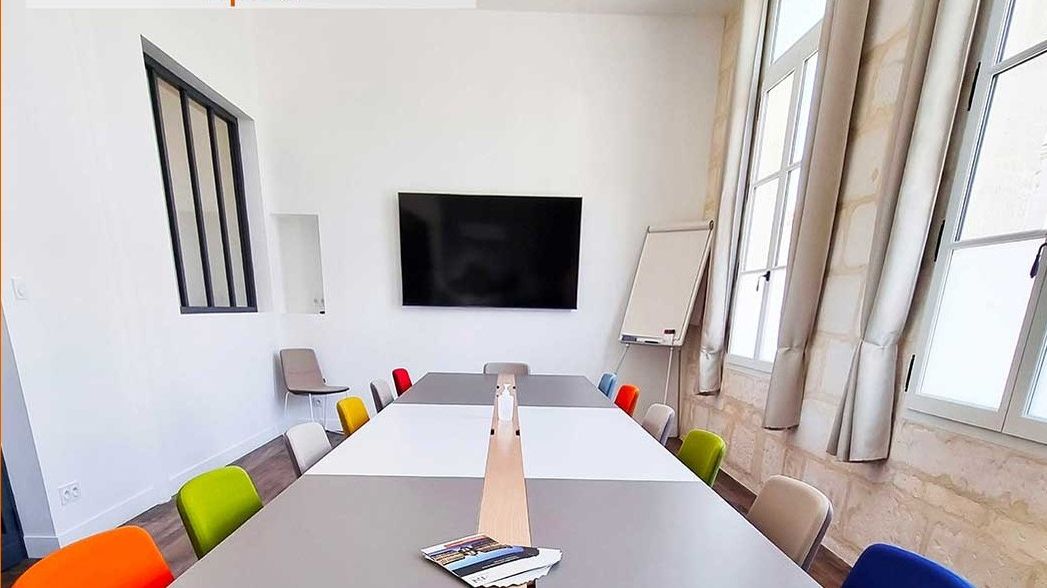
- Plan temporary premises: vacated offices, a converted meeting room, sometimes a temporary modular unit.
- Agree the schedule with you, then display it so that everyone knows where they will be working each week.
Working outside opening hours
Noisy or dusty work (demolition, drilling, sanding) can be scheduled early in the morning, in the evening or at the weekend. Quiet work continues during the day. The site is cleaned and made safe every day before business resumes.
Protecting and informing
Dust-tight site partitions, protected routes for customers and staff, clear signage: safety and the company's image are preserved. Teams, and customers if necessary, are kept informed of the timetable.
Emergency exits and escape routes must remain clear and signposted throughout the works, and safety equipment (fire extinguishers, alarm, emergency lighting) must remain in working order. If a zone under works cuts across a route, another one is created before the first is closed.
The rules specific to business premises
- Premises open to the public: the works must comply with accessibility and fire safety rules, and an authorisation for works sometimes has to be submitted to the town hall.
- Commercial lease: some works require the landlord's consent.
- Co-ownership: works affecting the common parts or the external appearance must go through the general meeting of co-owners.
- Asbestos: in a building whose building permit predates 1 July 1997, a pre-works asbestos survey is compulsory, and it must be carried out before firms are consulted.
The authorisation for works on premises open to the public is applied for using form cerfa no. 13824.
The processing time is four months from submission of a complete application, as the accessibility committee and the safety committee both give their opinion. If the works also require a prior declaration, for example to change the shopfront, both applications must be submitted. This timescale is often the first element of the schedule.
An example schedule
Take, by way of example, a shop open to the public that wants to refurbish its sales floor and create an accessible toilet.
Example: the schedule of a shop open to the public
| Submission of the complete application | early February |
| Processing time | 4 months |
| Expected response | by early June at the latest |
The works can then be placed in the quietest period of the year for this shop: the back room and the services first, during the day; then the sales floor, over a few well-prepared weeks, with the noisy work done in the morning before opening. Ordering the materials during the processing period avoids waiting for a delivery once the authorisation has been granted.
Using the works to reduce energy consumption
Commercial and office buildings of at least 1,000 m² are subject to the French "tertiary decree" (décret tertiaire): their energy consumption must fall, compared with a reference year, by:
It must be declared every year on the Ademe's OPERAT platform. Even for smaller premises, a renovation is the right moment to insulate, switch to LED lighting and adjust the heating and air conditioning.
Mistakes to avoid
- Starting works on premises open to the public without authorisation: the safety committee may refuse permission to open.
- Scheduling the works during your busiest period, when every day counts.
- Forgetting to notify the landlord or the managing agent before touching the walls, the façade or the shared services.
- Letting dust spread from one zone to another, for want of closed site partitions.
Our experience of commercial projects
Receptions, offices, entrance halls, staff rooms and meeting rooms: we renovate business premises, coordinating all the trades, with a schedule designed to limit disruption and meet your deadlines.
Sources : Code de la construction et de l’habitation, article L. 122-3 (autorisation de travaux dans un établissement recevant du public) · Formulaire cerfa n° 13824 (demande d’autorisation de construire, d’aménager ou de modifier un établissement recevant du public ; instruction en quatre mois) · Code de la construction et de l’habitation, article L. 174-1 (« décret tertiaire » : réduction des consommations de 40 % en 2030, 50 % en 2040, 60 % en 2050) · Code du travail, article R. 4412-97 (repérage de l’amiante avant travaux) · Code de commerce, articles L. 145-1 et suivants (bail commercial) · Loi n° 65-557 du 10 juillet 1965, article 25 (travaux touchant les parties communes ou l’aspect extérieur) · operat.ademe.fr
Frequently asked questions
Can a shop stay open during its renovation?
Often, yes, by working zone by zone and scheduling noisy work outside opening hours.
Do you need authorisation to renovate premises open to the public?
Works on premises open to the public often require an authorisation for works covering accessibility and fire safety.
Does the landlord have to give consent?
For some works, yes: it all depends on your commercial lease. It is best to check before starting the works.
How long does it take to obtain authorisation for works on premises open to the public?
Four months from submission of a complete application. It is best to submit the application well before the period chosen for the works.
Are my premises covered by the tertiary decree?
Yes, if the commercial and office activities in the building, or in several buildings on the same site, occupy at least 1,000 m² of floor area. Energy consumption must then be declared every year on OPERAT.
How long does an office renovation take?
It depends on the floor area, the number of zones and the hours available. Working in phases makes the project slightly longer, but avoids closing: it is the schedule drawn up with you that sets the duration.