Advice · Renovation
Renovating with healthy, durable materials
8 October 2026 · 5 min read · By the Aldeak team
Buildings weigh heavily in carbon emissions. Renovating rather than demolishing is already a strong step; choosing healthy, durable materials is another, which also makes the house more comfortable.
Why materials matter
A building emits carbon when its materials are manufactured, during its lifetime and when it is demolished. The RE2020 environmental regulation, in force since 2022 for new houses, now takes the footprint of materials into account. In renovation, no such rule applies, but the same choices are possible and often beneficial.
For a new house, the ceiling on emissions linked to construction, calculated over fifty years, fell from 640 to 530 kg CO2 equivalent per square metre on 1 January 2025. It is set to fall further, to 475 in 2028, then to 415 in 2031. This tightening is pushing manufacturers to publish the footprint of their products, which also benefits renovation: this data is available to everyone.
Bio-based insulation
- Wood fibre: good insulation, and excellent summer comfort thanks to its ability to slow down heat.
- Cellulose wadding, made from recycled paper, often blown into lofts.
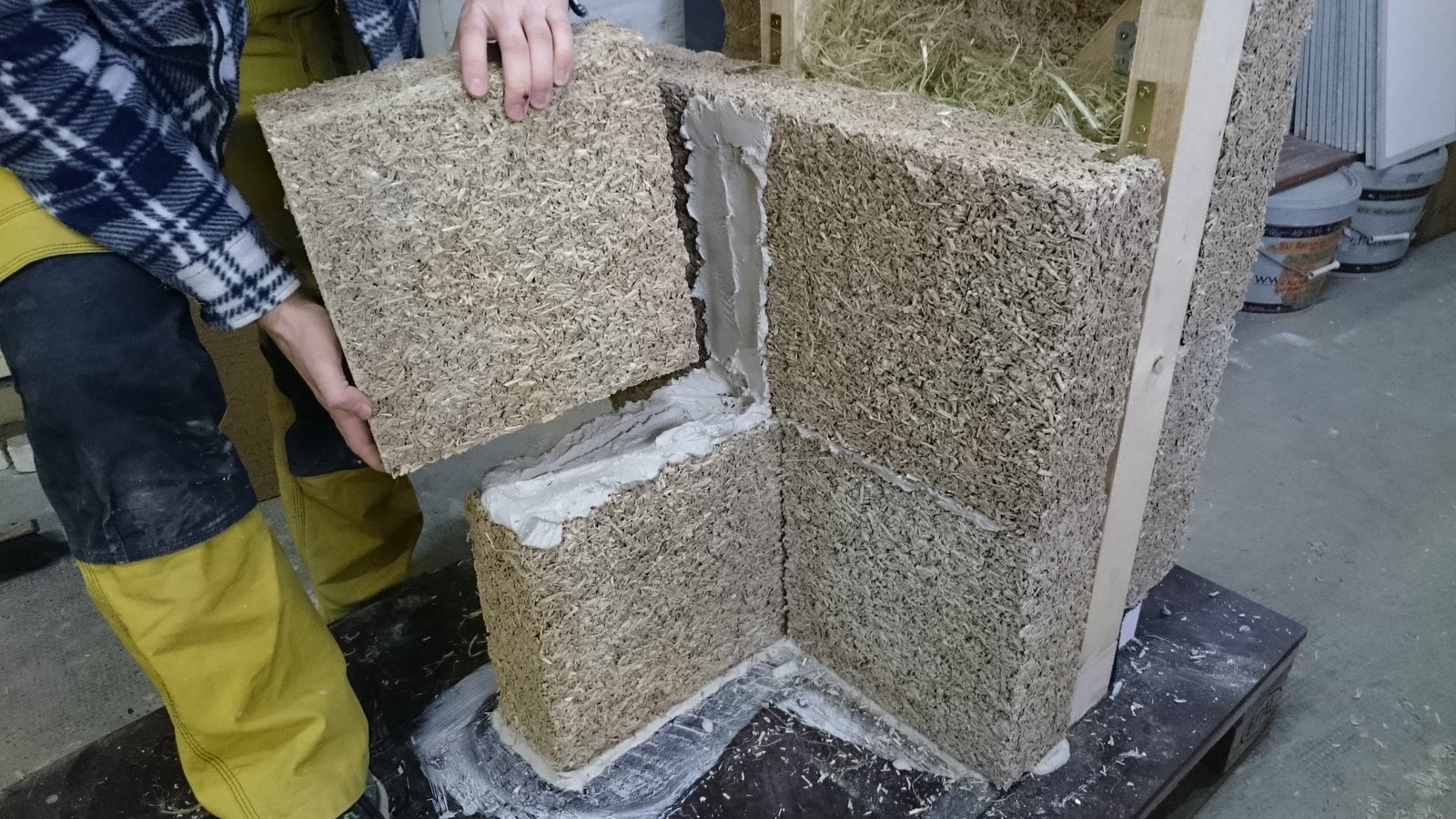
- Hemp, in boards or as hempcrete, suited to old walls.
- Sheep's wool or cork, for more specific uses.
A worked example: a loft in cellulose or wood fibre
Worked example: 80 m² of unconverted loft
Take, by way of example, an unconverted loft of 80 m² to be insulated. The official energy savings certificate sheet (BAR-EN-101), on which part of the grants depends, requires a thermal resistance of at least 7 m².K/W for the new insulation alone. The thickness needed is simple to calculate: resistance multiplied by the conductivity of the product (the “lambda” shown on its data sheet).
| Required thermal resistance | 7 m².K/W |
| Insulation at 0.040 W/m.K: 7 × 0.040 | 28 cm |
| Insulation at 0.038 W/m.K: 7 × 0.038 | about 27 cm |
| Thickness to allow, after settling | 27 to 28 cm |
For blown insulation, the thickness is measured after settling: the quote should state it, along with the number of bags planned. Bio-based insulation therefore requires no compromise on winter performance, but it does call for careful installation and a vapour control layer, or an equivalent system, where the data sheet specifies one.
Spotting a reliable product
- Certified thermal resistance: an ACERMI certificate guarantees the stated performance of the insulation.
- The indoor air label: compulsory on paints, coverings and insulation sold in France, from A+ (very low emissions) to C.
- The environmental product declaration (FDES): published in the public INIES database, it quantifies the carbon footprint of the product over its whole life.
Respecting older buildings
A stone house needs to “breathe”: moisture from the ground and the air must be able to escape through the wall.
A cement render or an impermeable insulation fitted without due care traps this moisture and damages the stone.
Lime, hemp-lime renders and vapour-permeable insulation protect the wall while improving comfort, as in a Basque house renovated with respect for its architecture.
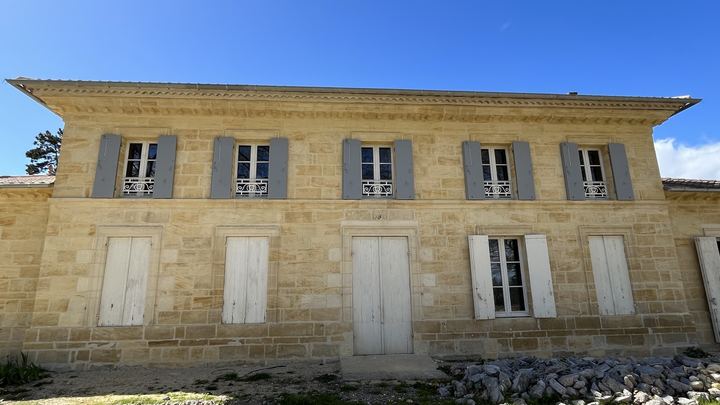
Take an illustrative case: a house in the Gironde built of limestone rubble, rendered in cement in the 1980s. On the north side, the bottom of the walls stays cold and the wallpaper is peeling. Replacing the internal insulation would not be enough: first the cement render has to be hacked off, the wall left to dry, the source of the water dealt with (gutters, impermeable ground at the foot of the wall), and then a lime render applied. The internal insulation comes afterwards, with a hemp-lime thermal corrective render or wood fibre boards that let vapour through. The Cerema, together with schools of architecture and heritage associations, runs a resource centre dedicated to these questions, the CREBA.
The stages of a project
- Carry out a survey: damp in the walls, condition of the roof structure, presence of termites (the whole of the Gironde is a monitored area), lead or asbestos surveys depending on the age of the house.
- Set the priorities with an energy audit, or at least a recent energy performance certificate (DPE).
- Choose the materials wall by wall, checking their compatibility with the substrate.
- Compare quotes that specify the product, thickness, thermal resistance and treatment of junctions and weak points.
- Plan the ventilation: a better-insulated, more airtight house needs controlled air renewal.
Mistakes to avoid
- Fitting bio-based insulation against a wall that is still damp, or behind a poorly placed impermeable membrane.
- Judging a material on its price per square metre alone, without taking thickness and installation into account.
- Believing that a “natural” product can do without certification or a technical data sheet.
- Forgetting summer comfort in converted lofts, where dense insulation makes all the difference.
Reuse and durability
Keeping what can be kept (beams, terracotta floor tiles, restored old joinery, reclaimed stone) reduces waste and preserves the character of the house. Choosing materials that last and are easy to repair is also an environmental choice.
“The most sober renovation is the one you do not have to redo in ten years.”
Everyday comfort
Natural materials regulate indoor humidity, limit pollutant emissions and create a warmer atmosphere. They can cost a little more to buy, but their value is measured over the lifetime of the house.
Our approach
On our projects on older houses, we favour solutions that are compatible with the building, stone, lime and wood, and we present the options to you with their advantages and their cost.
Sources : Décret n° 2021-1004 du 29 juillet 2021 (réglementation environnementale RE2020 des maisons neuves) · Arrêté du 4 août 2021 modifié (exigences de la RE2020, seuils d’émissions de la construction 2022, 2025, 2028 et 2031) · ecologie.gouv.fr, fiche CEE BAR-EN-101 (isolation des combles, R ≥ 7 m².K/W) · Arrêté du 19 avril 2011 (étiquetage des émissions des produits de construction dans l’air intérieur, classes A+ à C) · inies.fr, base des fiches environnementales (FDES) · rehabilitation-bati-ancien.fr, centre de ressources CREBA piloté par le Cerema · legifrance.gouv.fr
Frequently asked questions
Do bio-based insulation materials insulate as well?
For the same thickness, their winter performance is close to that of conventional insulation, and they often provide better summer comfort.
Can a stone wall be insulated?
Yes, with insulation and renders that let water vapour through, such as lime and hemp, so as not to trap moisture.
Does RE2020 apply to a renovation?
No, it concerns new buildings. In renovation, other rules apply, thermal ones in particular.
Are bio-based insulation materials eligible for grants?
Yes, under the same conditions as the others: minimum performance, an RGE-certified contractor and an application submitted before the quote is signed. Whether the insulation is natural or not makes no difference.
Where can I find the carbon footprint of a material?
In the public INIES database, which brings together the verified environmental product declarations (FDES) submitted by manufacturers.
Is natural insulation vulnerable to rodents or damp?
Commercial products are treated and tested; their technical data sheet sets out the approved uses. Damp remains the real risk: no insulation, natural or not, should ever stay wet.