
Advice · Design trends
The colours that give character to a renovated house
8 October 2026 · 4 min read · By the Aldeak team
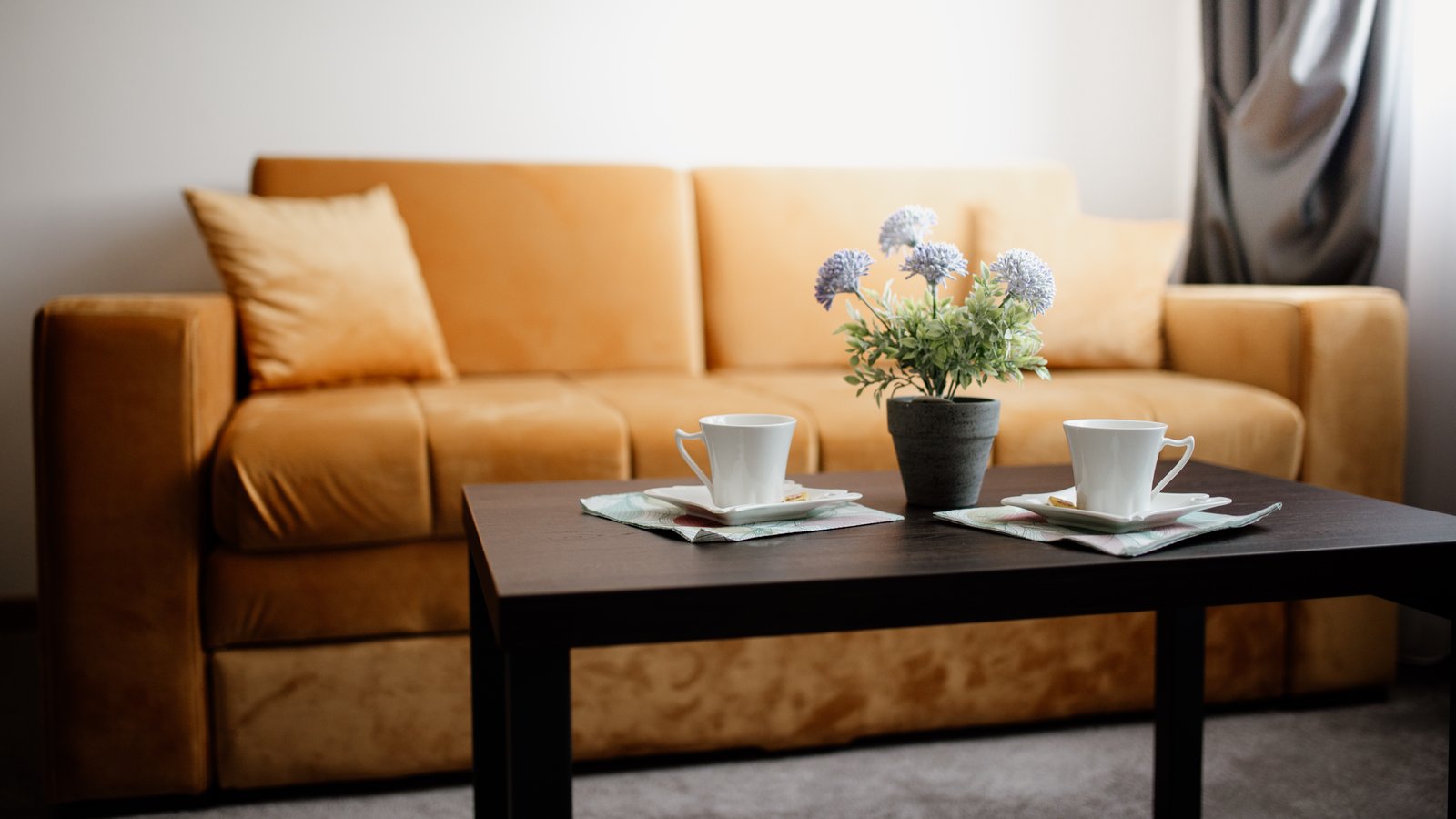
After years of grey and pure white, houses are rediscovering warm, natural colours. The good news: they go very well with what gives the houses of our region their charm, namely stone, wood and light.
The return of earth colours
Terracotta, ochre, clay pink, caramel brown: these shades recall raw materials and instantly warm up a room. They work particularly well in the stone houses of the Gironde and in Basque interiors, where they echo terracotta floor tiles, beams and wooden joinery.
To avoid an "all orange" effect, they are kept for one wall, an alcove or a recess, and paired with off-whites.
Sage green, the soothing colour
Neither too bright nor too dark, sage green has settled into bedrooms, kitchens and bathrooms. It creates a calm atmosphere, goes as well with light wood as with brass, and remains easy to live with day to day. In the kitchen, it works just as well on a wall as on cabinet fronts.
Deep blues to add structure
Midnight blue, Prussian blue, slate blue: these dark blues give depth to a bookcase, a door, a headboard wall or a kitchen island. They need light: in a poorly lit room, they are kept for smaller surfaces.
Warm whites rather than pure white
Pure, bluish white can look cold, especially in a north-facing room. Whites slightly tinted with beige, warm grey or pale yellow are softer and bring out natural materials. They are the ones that serve as a backdrop for the whole house.
An example to help you find your way
Take, as an example, a living room of 4 metres by 5, with a ceiling height of 2.50 metres. Its walls amount to 45 m², from which about 5 m² of doors and windows are deducted: that leaves 40 m² to paint, or 80 m² to cover in two coats. The coverage, shown on each tin in square metres per litre per coat, gives the quantity to buy; always keep a little left over for touch-ups.
A simple colour scheme for this room: a warm white on three walls and the ceiling, a softened terracotta on the wall facing the windows, where the light shows it off, and sage green kept for a bookcase or the interior doors. One strong colour, two supporting shades: the room stays calm and warm.
Preparing the walls before painting
A beautiful colour will not make up for a badly prepared wall. Fill, sand and dust, then apply an undercoat suited to the surface: new plaster, old paint, lime render. On an old stone wall or a lime-rendered wall, choose a paint that lets water vapour through (lime, silicate or mineral paint), so as not to trap moisture.
In a house built before 1949, old layers of paint may contain lead. The lead exposure risk report (CREP), compulsory when these homes are sold or let in France, shows where they are. Before sanding or stripping old paint, consult it or have the paint checked: sanding lead paint produces hazardous dust, particularly for children and pregnant women.
Choosing a healthy paint
Since 2012, paints sold in France carry a label that rates their emissions of indoor air pollutants, from A+ (very low emissions) to C (high emissions). For bedrooms and living areas, aim for class A+. The EU Ecolabel goes further by also restricting certain hazardous substances. After the work, ventilate thoroughly for several days.
Our advice for choosing
- Start from what does not change: floor, stone, wood, the view of the garden. The colour must work with them.
- Consider the orientation: a north-facing room does not suit cold tones, a fully south-facing room can take deeper shades.
- Test on a large scale: a one-square-metre sample, looked at in the morning, the afternoon and the evening, avoids unpleasant surprises.
- Think about the finish: a matt paint absorbs light and hides imperfections, a satin finish is easier to clean in a kitchen or a hallway.
Mistakes to avoid
- Choosing from a colour chart a few centimetres wide: a shade almost always looks stronger on a whole wall.
- Using too many strong colours: beyond one or two per room, the eye no longer knows where to rest.
- Forgetting the ceiling: a cold white above warm white walls creates a noticeable contrast; choose a white from the same family.
- Looking at each room in isolation: from the entrance, you can often see three rooms at once. The colours must work together.
- Painting a damp wall: the paint blisters and the colour becomes stained. Deal with the cause of the damp first.
During a whole-house renovation, we choose the colours with you at the same time as the materials, so that everything remains consistent from one room to the next.
Sources : Arrêté du 19 avril 2011 (étiquetage des émissions des peintures et revêtements dans l’air intérieur, classes A+ à C) · Code de la santé publique, articles L. 1334-5 et suivants (constat de risque d’exposition au plomb, logements construits avant 1949) · Code de l’urbanisme, article R. 421-17 (déclaration préalable pour la modification de l’aspect extérieur) · service-public.fr
Frequently asked questions
- Which colour should you choose for a dimly lit living room?
- Warm whites or light, slightly tinted tones (sand, linen, very pale green). Dark colours are best kept for small surfaces.
- Can you use a dark colour in a small room?
- Yes, provided there is enough light and it is used on a single wall or as a dado. It can even add depth.
- Should the wall colour be chosen before or after the floor?
- After. The floor, stone and wood are the most lasting elements: the wall colours are matched to them.
- Do you need permission to change the colour of the façade or the shutters?
- Generally yes: changing the exterior appearance of a house requires a prior declaration at the town hall, and many municipalities set the permitted colours in their planning regulations. Interior colours, on the other hand, are entirely up to you.
- Which paint should you choose for a child's bedroom?
- A paint rated A+ on the emissions label, ideally carrying the EU Ecolabel, applied several days before the room is used, with the windows open.
- Can you paint a stone wall or a lime-rendered wall?
- Yes, with a paint that lets the wall breathe: lime, silicate or mineral paint. A film-forming paint traps moisture and may blister.